Security infrastructure can involve cameras, recorders, switches, firewalls and network connections working together across several locations. When one part develops a technical issue, identifying the problem is only the starting point. Teams also need to determine where the fault sits, document what has been found, investigate the issue and make sure anything that cannot be resolved at the initial level reaches the right technical team.
The UK Government’s Draft Revised Telecommunications Security Code of Practice 2026 defines a Network Operations Centre as a location where network engineers continuously monitor network performance and health. UK Government’s Telecommunications Security Code of Practice 2026 and NIST’s September 2026 draft Guide to Operational Technology Security also place network monitoring alongside performance and reliability requirements for connected operational systems, including physical access control environments.
A structured remote NOC function brings these technical activities together. It provides a defined way to monitor systems, investigate faults, manage technical tickets, support remote commissioning and escalate issues when additional expertise is required.
This article looks at how these processes can help security providers manage technical issues across multiple locations while supporting more reliable security infrastructure.
How Does Network Monitoring Support Security Infrastructure?
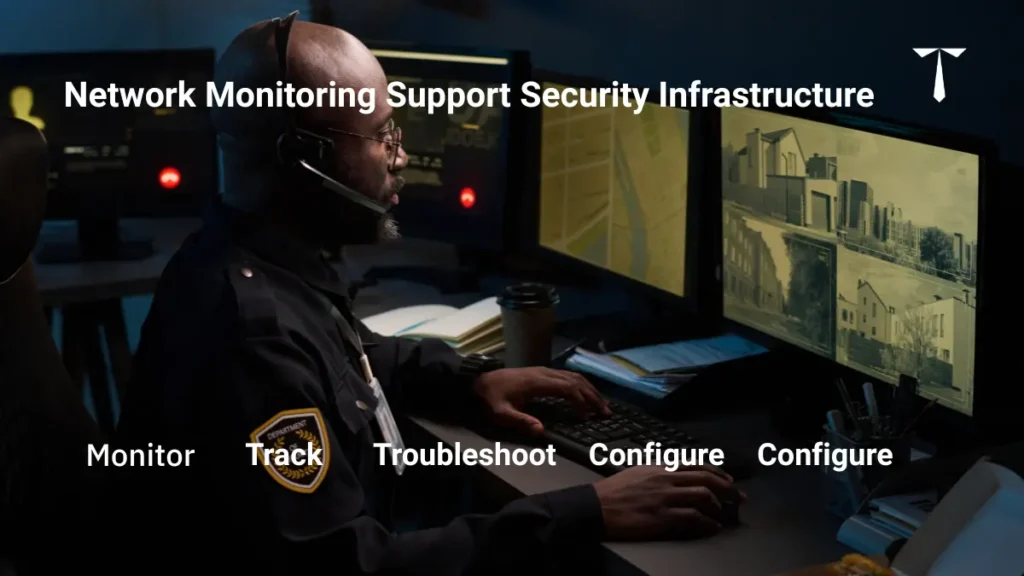
Security providers managing several locations need a clear view of the technical condition of the systems supporting each site. Cameras, recorders, switches, firewalls and other connected devices can all affect system availability, so knowing when something changes is important.
A structured monitoring process can help teams identify issues earlier and establish where further investigation may be needed.
Some of the main operational priorities include:
- Device status visibility: Technical teams can identify devices that are offline, unstable or reporting faults.
- Connectivity checks: Network availability can be reviewed to determine where communication between systems may be affected.
- Early fault identification: Technical issues can be recognised and documented before they create wider operational disruption.
- Structured escalation: Issues that cannot be resolved at the initial support level can be passed to the appropriate technical team with the relevant details.
- Multi-site awareness: NOC teams can maintain visibility of technical conditions across different client environments.
Effective system monitoring gives security providers the information they need to manage technical issues in a more structured and consistent way.
What Makes Technical Troubleshooting More Effective?
When a system fault appears, the first step is understanding where the problem sits and what level of support it requires. For security providers managing multiple locations, a defined troubleshooting process helps technical teams investigate faults without losing time through disconnected checks or unclear ownership.
A structured approach can include:
- Initial fault assessment: Tier 1 teams can review device status, connectivity and reported errors to identify the likely source of the issue.
- Clear technical documentation: Findings, actions taken and relevant system details can be recorded so the next support level has the context needed to continue the investigation.
- Tier 2 escalation: More complex issues can be passed to specialists for deeper troubleshooting, configuration support or network-related investigation.
- Defined ownership: Each issue can move through the appropriate technical path rather than remaining unresolved between different teams.
- Consistent troubleshooting: Established procedures help teams approach similar faults in an organised way across different client environments.
The aim is to move from identifying a fault to either resolving it or escalating it with a clear understanding of what has already been checked and what needs to happen next.
Why Does Ticket Management Matter in a NOC Network?
Technical issues are easier to manage when each fault has a clear record, owner and next step. For security providers handling multiple sites, ticket management helps prevent issues from being lost between teams and provides a consistent way to track what has been reported, investigated and resolved.
A well-managed ticketing process can provide:
- Clear issue logging: Fault details, affected systems and initial observations can be recorded from the beginning.
- Ownership and status tracking: Teams can see who is handling an issue and where it currently stands.
- Escalation history: Actions taken at Tier 1 and Tier 2 can be documented, giving support teams the context required to continue the investigation.
- Resolution records: Completed actions can be captured for future reference and recurring issue analysis.
- Better coordination: Technical teams, site contacts and field teams can work from the same issue history rather than relying on scattered updates.
A clear ticket trail makes it easier to follow an issue from the initial report through investigation, escalation and resolution.
How Does Remote Commissioning Support Technical Operations?
Security providers do not always need to send a specialist to every site to complete a technical change. Within the agreed scope, remote commissioning can support configuration, programming and system setup across multiple locations.
This can make technical changes easier to coordinate while giving teams a clear record of what has been completed.
Remote commissioning may involve:
- System configuration: Technical settings can be reviewed and updated according to site requirements.
- Programming support: Tier 2 specialists can assist with more advanced system changes where required.
- Remote validation: Configured systems can be checked to confirm that the required settings have been applied.
- Clear change records: Technical adjustments can be documented so teams know what was changed and when.
- Coordinated support: Remote teams can work alongside site contacts, field engineers or internal technical teams when physical intervention is still required.
Remote commissioning can therefore help security providers manage technical changes consistently while reducing unnecessary dependence on site-based support for tasks that can be handled remotely.
How Does Infrastructure Reliability Support Security Monitoring?
Security operations rely on connected systems working together consistently. When cameras, recorders, switches, firewalls or network connections develop faults, the effect can extend beyond a single device.
For teams managing several locations, infrastructure reliability depends not only on identifying technical problems but also on how those problems are tracked, investigated and handled.
Important areas include:
- System availability: Teams need visibility into which devices and connections are operating as expected.
- Fault coordination: Technical issues should move through a defined process for investigation, escalation and resolution.
- Configuration consistency: System settings and changes need to be managed carefully across different client environments.
- Technical records: Fault history, actions taken and completed changes should remain documented for future reference.
- Cross-site reliability: Consistent technical standards and processes can help teams manage infrastructure across multiple locations.
Reliable infrastructure depends on structured technical support that keeps systems visible, issues documented and responsibilities clear throughout the resolution process.
How Technomine Supports Remote NOC Operations
Security providers managing multiple locations may be working with different devices, networks, configurations and service requirements. Keeping the technical workload organised across these environments requires defined support processes and clear escalation paths.
Technomine supports this through Tier 1 and Tier 2 Remote NOC services, helping manage the technical workload behind connected security systems.
Areas of support include:
- Tier 1 technical support: System status checks, initial fault identification, ticket handling and structured escalation.
- Tier 2 technical support: Advanced troubleshooting, programming, configuration and remote commissioning within the agreed service scope.
- Technical coordination: Issues can be documented and routed to the appropriate team with the information needed for further action.
- Multi-site support: Technical teams can support infrastructure behind remote CCTV monitoring and remote security monitoring across different client environments.
- Clear operational records: Faults, technical actions, escalations and completed changes can remain documented throughout the support process.
Technomine provides the technical support behind security infrastructure, helping security providers manage systems, faults and escalations through a more consistent process across locations.
Strengthen the Technical Backbone of Security Operations
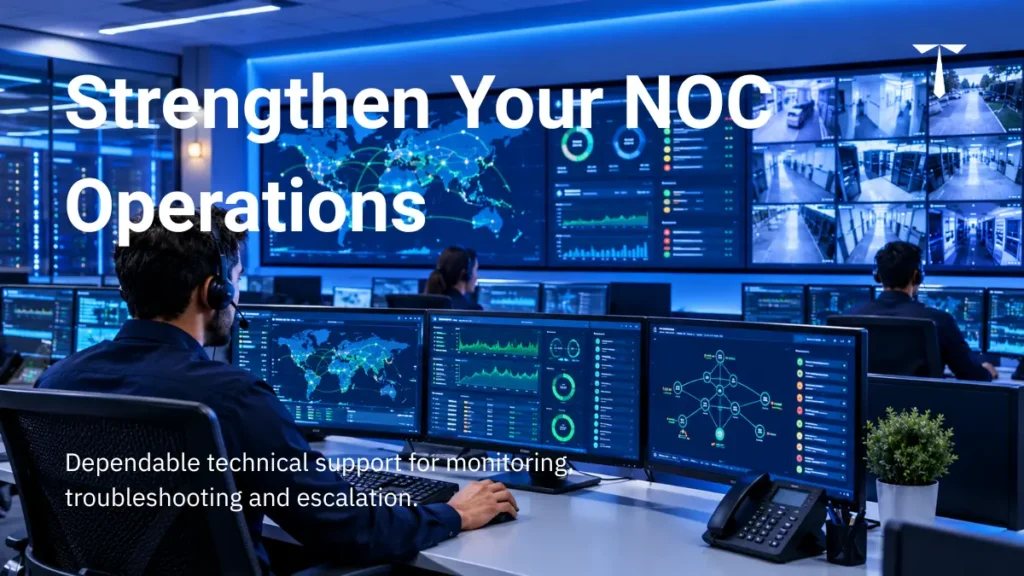
Reliable security video surveillance depends on more than individual devices working in isolation. Security providers need technical support that can monitor systems, investigate faults, manage tickets, support commissioning and escalate more complex issues through the appropriate technical path.
Talk to Technomine about dependable Remote NOC support for monitoring, troubleshooting, ticket management and remote commissioning across your security infrastructure.