
Operational problems rarely begin as major failures. They often start with a missed handover, an uneven workload, delayed information, or a process that nobody can clearly track. As these gaps accumulate, leaders can find it harder to understand what is happening across teams, where resources are needed, and which issues require attention.
This need for greater clarity is reflected in current workforce research. The International Labour Organization’s Employment and Social Trends 2026 report highlights continuing productivity, demographic, and labour market pressures that make effective workforce decisions increasingly important.
Strong strategic workforce management starts with a clear view of how people, processes, information, and daily activities connect. This article explores how greater visibility can improve workflow efficiency, strengthen collaboration and accountability, support informed decisions, and give leaders greater control over business performance.
Operational Awareness Creates Business Clarity

Leaders cannot manage operations effectively if they can see the outcome but not what is happening behind it. A delayed service, rising workload, or missed target can involve several contributing factors across teams, processes, and information.
Operational visibility brings these details together and gives leaders a clearer understanding of current business activity.
Greater awareness helps leaders:
- See how workloads are distributed across teams.
- Identify changing operational priorities.
- Understand where resources require attention.
- Recognise gaps affecting service delivery.
- Coordinate people and resources more effectively.
Clear operational awareness gives leaders the context they need to identify priorities and make decisions based on current business requirements.
Activity Visibility Improves Resource Coordination
A busy team is not always an efficiently utilised team. Leaders need to understand who is responsible for each activity, where workloads are concentrated, and which areas require additional capacity.
Activity visibility provides this practical view of daily work. It can reveal teams carrying heavier workloads, responsibilities that need clearer ownership, and areas where available resources could be better allocated.
This information also helps organisations assess workforce planning solutions against actual operational requirements instead of relying solely on headcount.
When daily activities are clearly understood, resource decisions become more focused. Leaders can adjust workforce capacity as priorities change while keeping responsibilities aligned across teams.
Process Visibility Identifies Operational Gaps
A process can look efficient on paper and still create delays in practice. Work may pass between departments with unclear ownership, unnecessary steps, or inconsistent handovers.
Strong business process visibility helps leaders understand how work actually progresses and where improvement is required.
Key areas to examine include:
- Where delays regularly occur.
- Which process steps add unnecessary complexity.
- Who owns each stage of the process.
- How effectively work moves between departments.
- Where inconsistencies affect outcomes.
Understanding the complete process allows leaders to focus improvements on specific operational gaps instead of making broad changes without clear evidence.
The result is greater process consistency, clearer ownership, and smoother movement of work across the organisation.
Workflow Efficiency Strengthens Daily Operations
Knowing how a process should work is one thing. Ensuring tasks move efficiently through that process is another.
Clear workflows help employees understand what needs to happen next, who is responsible, and how individual activities connect. This reduces confusion around task progression and supports stronger coordination between departments.
What improves when workflows are clear?
- Tasks move between teams with greater consistency.
- Repeated or unnecessary steps become easier to identify.
- Responsibilities are easier to follow.
- Available resources can be used more effectively.
- Service delivery remains aligned with operational requirements.
Improving operational efficiency does not always require major process changes. Clear responsibilities and better coordination can make existing workflows easier to manage and more consistent.
Performance Visibility Guides Better Decisions
Activity alone does not show if operations are delivering the expected results. Leaders also need to understand how daily work contributes to service quality, resource use, and wider business objectives.
Clear visibility into operational performance provides this connection.
Effective performance monitoring should help leaders answer practical questions:
- Are operational objectives being achieved?
- Which areas require management attention?
- Are workload changes affecting service outcomes?
- Do the same performance gaps continue to appear?
- Are operational improvements producing the intended results?
Performance information becomes valuable when it leads to action. A clear view of outcomes allows leaders to focus attention where it matters, strengthen accountability, and make informed adjustments when results fall short of expectations.
Information Visibility Strengthens Team Collaboration
Teams cannot coordinate effectively when departments are working with different or incomplete information. Operational priorities can change quickly, and employees need access to relevant information to understand what requires their attention.
Clear information visibility creates a shared understanding of priorities, responsibilities, and current operational requirements.
It helps teams communicate more consistently, reduces gaps caused by missing information, and gives decision-makers a stronger basis for evaluating situations.
This is particularly important when work moves across several departments or locations. Relevant information needs to reach the people responsible for acting on it.
When teams are working with the same operational context, collaboration becomes easier, responsibilities become clearer, and decisions remain better aligned across the organisation.
Operational Control Supports Business Performance
Operational control is stronger when leaders understand how people, processes, information, workloads, and results connect. This broader view makes it easier to determine what requires attention and where resources should be directed.
Greater control can help organisations:
- Maintain clear ownership across teams and processes.
- Coordinate resources as requirements change.
- Address operational gaps affecting service delivery.
- Maintain consistency across departments and locations.
- Keep decisions aligned with wider business objectives.
Better control does not mean adding more layers of management. It means giving leaders enough clarity to identify priorities, coordinate resources, and act effectively.
This clarity strengthens business operations management by connecting day-to-day activities with wider organisational objectives. When operations remain visible and coordinated, organisations are better positioned to maintain service standards and support sustainable business performance.
Turn Visibility Into Stronger Business Performance
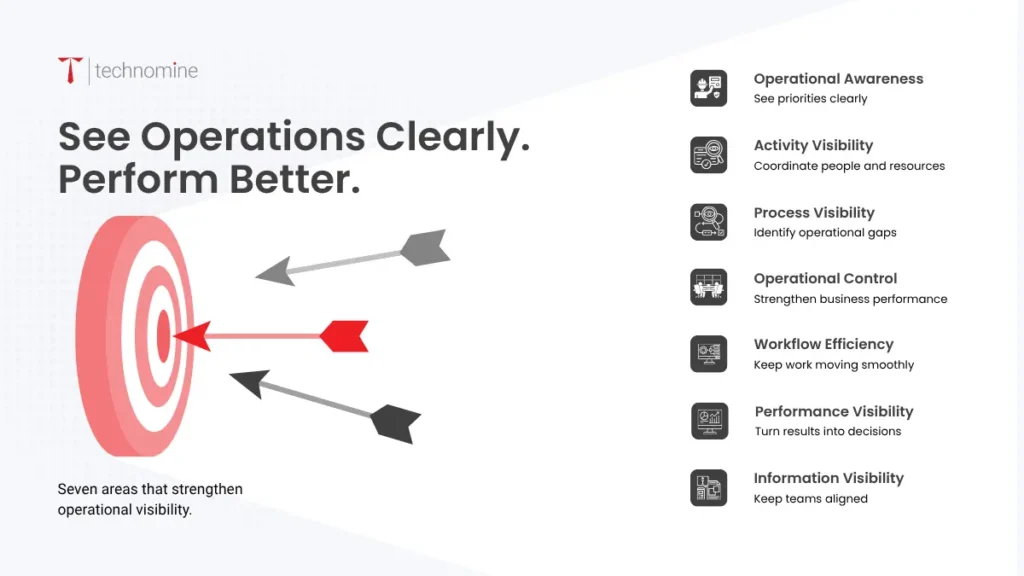
Clear visibility across people, processes, information, workflows, and performance gives leaders a stronger foundation for managing operations. It enables organisations to understand what is happening, identify what requires attention, and coordinate resources around genuine business priorities.
Effective strategic workforce management builds on this clarity. When leaders can connect workforce activity with processes and performance, they can strengthen accountability, improve coordination, and make better business decisions as operational demands grow.
Ready to gain greater clarity across your operations? Connect with Technomine to strengthen operational visibility, improve coordination, and support better business decisions.