
Growth often exposes workforce challenges before financial results reveal them. Teams become overloaded, vacancies remain open longer, service quality begins to fluctuate, and hiring decisions become increasingly reactive. The issue is rarely a shortage of people alone. More often than not, organisations lack clear visibility into workloads, operational capacity, and changing business demands.
The need for better workforce planning is becoming more evident. The International Labour Organization’s Employment and Social Trends 2026 report highlights that while labour markets remain stable, organisations continue to face growing pressures from demographic changes, productivity challenges, and evolving workforce needs, making informed workforce decisions more important than ever. At the same time, the OECD’s A Skills First Labour Market report emphasises that employers are placing greater value on understanding workforce capabilities and changing skill requirements to strengthen hiring and long-term workforce planning.
This article explores how operational visibility strengthens workforce planning strategies by providing a clearer view of workloads, team capacity, and service delivery. It also explains how better visibility helps organisations make informed hiring decisions, improve workforce readiness, and build sustainable growth with greater confidence.
Workforce Visibility Improves Hiring Planning

Hiring decisions are more effective when they are based on operational visibility instead of assumptions. A clear understanding of workloads, team capacity, service demands, and upcoming business priorities helps organisations identify genuine workforce needs before they affect performance. This creates a stronger foundation for recruitment workforce planning, allowing hiring decisions to support both current operations and future growth.
Key benefits of workforce visibility
- Identifies departments operating beyond capacity before service levels decline.
- Helps prioritise critical vacancies based on business impact.
- Reveals skills gaps that require hiring or internal development.
- Improves resource allocation across teams and locations.
- Supports a more effective talent acquisition strategy by aligning recruitment with operational priorities instead of reactive hiring.
- Reduces unnecessary recruitment costs by improving the accuracy of workforce planning.
Organisations that understand how work is distributed across the business are better positioned to recruit the right people at the right time, improving operational stability while supporting sustainable growth.
Talent Market Visibility Supports Workforce Readiness
Internal visibility is only one part of effective workforce planning. Organisations also need a clear understanding of external labour market conditions. Tracking skills availability, recruitment trends, and changing workforce expectations helps leaders prepare for future hiring needs instead of responding after talent shortages emerge. This proactive approach also answers an important business question: how to improve the recruitment process through better planning rather than faster hiring.
Why talent market visibility matters
- Identifies emerging skill shortages before they affect operations.
- Supports realistic hiring timelines based on labour market conditions.
- Helps prioritise critical roles where talent demand is highest.
- Strengthens succession and workforce continuity planning.
- Improves decision-making by combining operational data with workforce planning and analytics.
- Enables organisations to adapt workforce strategies as business requirements change.
A broader view of both internal operations and external talent markets helps organisations build a workforce that is prepared for future business demands, not just current vacancies.
Operational Visibility Enables Better Workforce Decisions
Effective workforce planning depends on timely, accurate operational information. When leaders have visibility into people, workloads, service delivery, and business priorities, they can make decisions based on evidence rather than assumptions. This reduces uncertainty and helps organisations allocate resources where they create the greatest value.
Operational visibility helps organisations
- Balance workloads across teams to prevent capacity gaps.
- Align staffing levels with changing business demand.
- Identify operational risks before they affect service delivery.
- Improve coordination between departments.
- Support workforce development through better skills planning.
- Make faster, more informed staffing and resource decisions.
Workforce planning becomes more effective when operational decisions are guided by visibility, helping organisations maintain service quality while supporting long-term growth.
Building Workforce Planning Into Business Growth
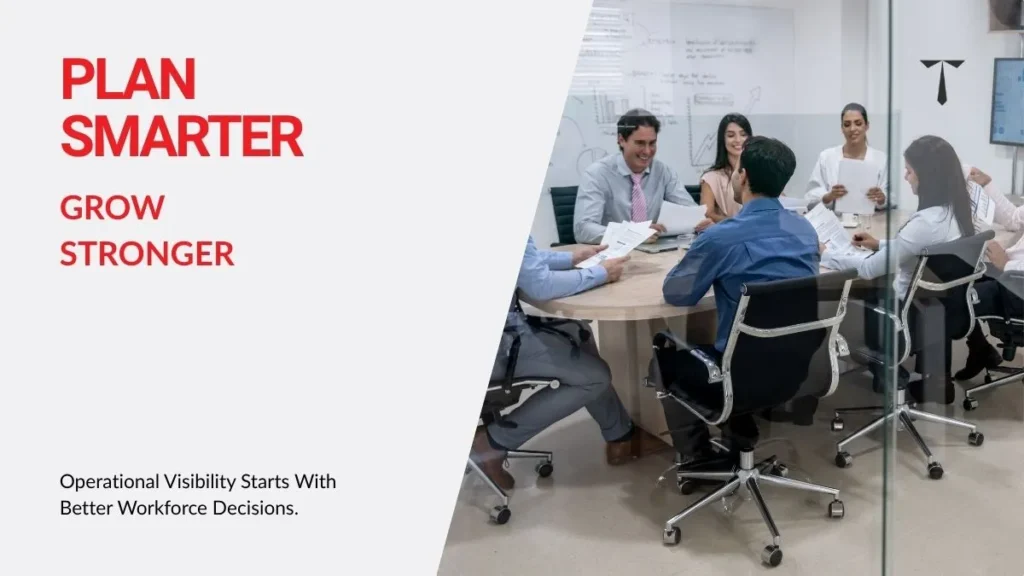
Business growth places increasing demands on people, resources, and operations. Organisations that review workforce requirements regularly are better equipped to scale without disrupting service delivery. Workforce planning should therefore be an ongoing business activity that evolves alongside operational priorities.
Practical steps to strengthen workforce planning
- Review workforce capacity alongside business growth plans.
- Monitor workload trends across departments regularly.
- Identify critical roles and future skill requirements.
- Develop internal talent to reduce future hiring pressure.
- Use operational performance insights to guide staffing decisions.
- Review workforce plans periodically to reflect changing business needs.
Strong workforce planning is built on continuous visibility, regular evaluation, and informed decision-making. This approach helps organisations remain prepared as operational demands continue to grow.
Measuring Workforce Planning Success
Effective workforce planning does not end after hiring decisions are made. Organisations should regularly evaluate workforce outcomes to ensure staffing plans continue to support operational objectives. Measuring the right indicators helps leaders identify what is working, where adjustments are needed, and how workforce decisions affect overall business performance.
Key areas to monitor
- Workforce capacity against operational demand.
- Time taken to fill critical roles.
- Employee retention across key functions.
- Workload distribution between teams.
- Service delivery performance after recruitment.
- Skills availability to support future business needs.
Regular measurement helps organisations refine workforce planning over time, ensuring staffing decisions remain aligned with operational priorities and long-term business goals.
Strong Workforce Planning Starts With Visibility

Operational visibility gives organisations the clarity to make informed workforce decisions before challenges affect performance. By understanding workloads, capacity, and business priorities, leaders can build workforce planning strategies that support sustainable growth and stronger operational performance.
Ready to strengthen your workforce planning? Connect with Technomine to improve operational visibility, make informed staffing decisions, and build a workforce prepared for future growth.